 CoreMacro
BCA’s flagship global macro and investment strategy platform, helping investors anticipate regime shifts, connect signals across regions and asset classes, and navigate the world’s most difficult macro questions.
For the month of February, the model underperformed both global and U.S. equities. For March, the model has modestly pared back its equity risk exposure, shifting the allocation into bonds. While Europe remains the largest equity overweight, EM and Canada also received some allocation. The U.S. and New Zealand were slightly downgraded. In the fixed-income space, the model is sticking with Italy and Spain.


Where is the most likely mispricing of interest rates today? Plus our latest thoughts on the U.K.'s June 23 referendum on EU membership, and its market implications.

The Chinese authorities are stepping up coordinated efforts to boost the economy. There has been a clear shift of policy focus from the "supply side" reforms to "demand side" management. Quickening credit creation bodes well for industrial activity, the hardest hit sector in the ongoing growth slowdown.

Credit growth acceleration in China is a bearish development in the long run. Potential non-performing loans at Chinese banks could wipe out 40-55% of their equity capital. "Muddling through" for China, from its own internal standpoint, is possible. However, Chinese stocks and China-related equities worldwide will remain in a bear market. From the perspective of the rest of the world, China is now in recession.

The agreement to freeze oil production should reduce tail risks, even if it does not improve overall corporate sector health and profits.

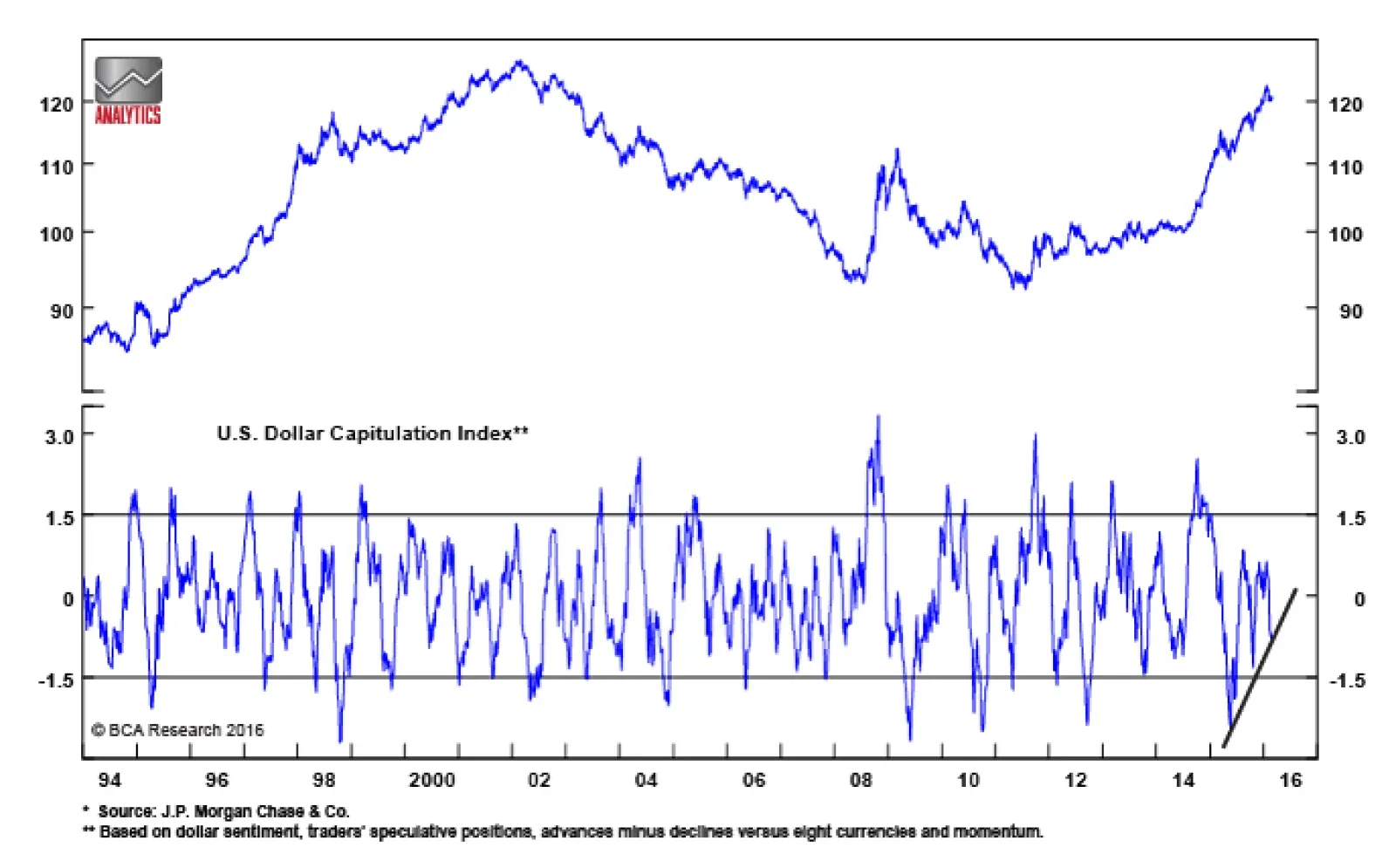
Markets see long-term global growth prospects as having deteriorated materially, with policymakers unwilling or unable to do much about it. Meanwhile, recent economic data - U.S. notably - hasn't been that bad. A divergence between what matters to Wall Street versus Main Street explains the disconnect. Accelerating wage growth, lower commodity prices, and cheaper rates are positives for households - but not for many Wall Street sectors. Stay neutral global equities. T-bonds are a "hold" for now. The dollar's selloff is overdone.


Greater safety for European taxpayers and bank depositors necessarily means more risk for bank equity and bond investors. We provide some detail, and also initiate two new short-term positions.