 Equities
| US Equities
US equity research, from the S&P 500 to sectors and factors, on where stocks are heading next.
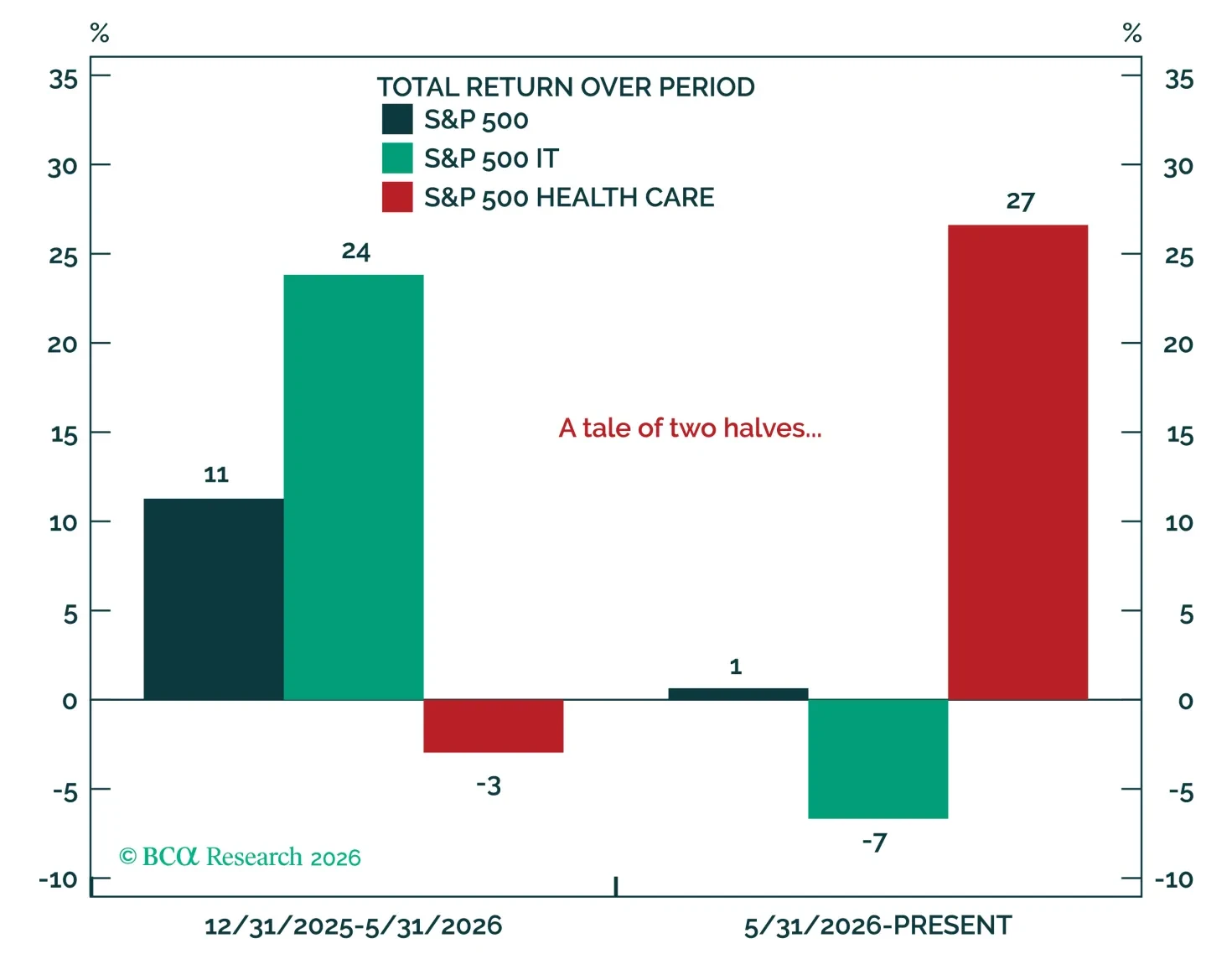
Health Care’s second-half 2026 rally has largely been a defensive rotation, not the start of a new bull market. Health Care leadership is more typical when the economy is slowing/contracting and is hard to sustain in a rising market. With the cycle still firm and our expectation that the market rallies into year end, we are neutral on the sector, though we recognize its hedging value. Within Health Care, we are underweight Providers & Services, overweight Equipment & Supplies, and market weight Pharmaceuticals, Biotech & Life Sciences (“Pharma”).
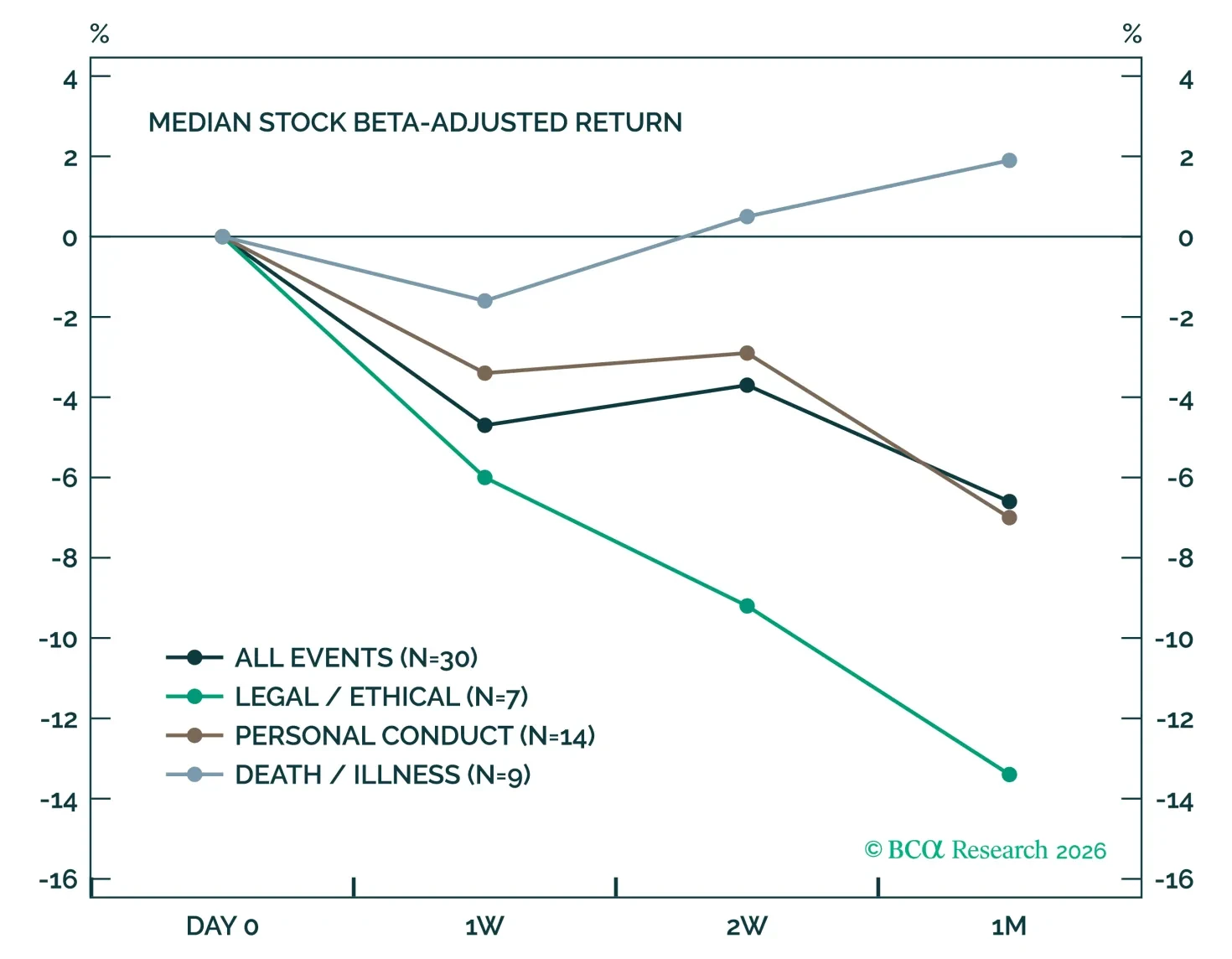
Is the unexpected departure of a CEO a meaningfully negative event? Yes, for the stock in question, particularly if the departure is driven by a legal or ethical issue, less so for its sector, and no for the broader market.
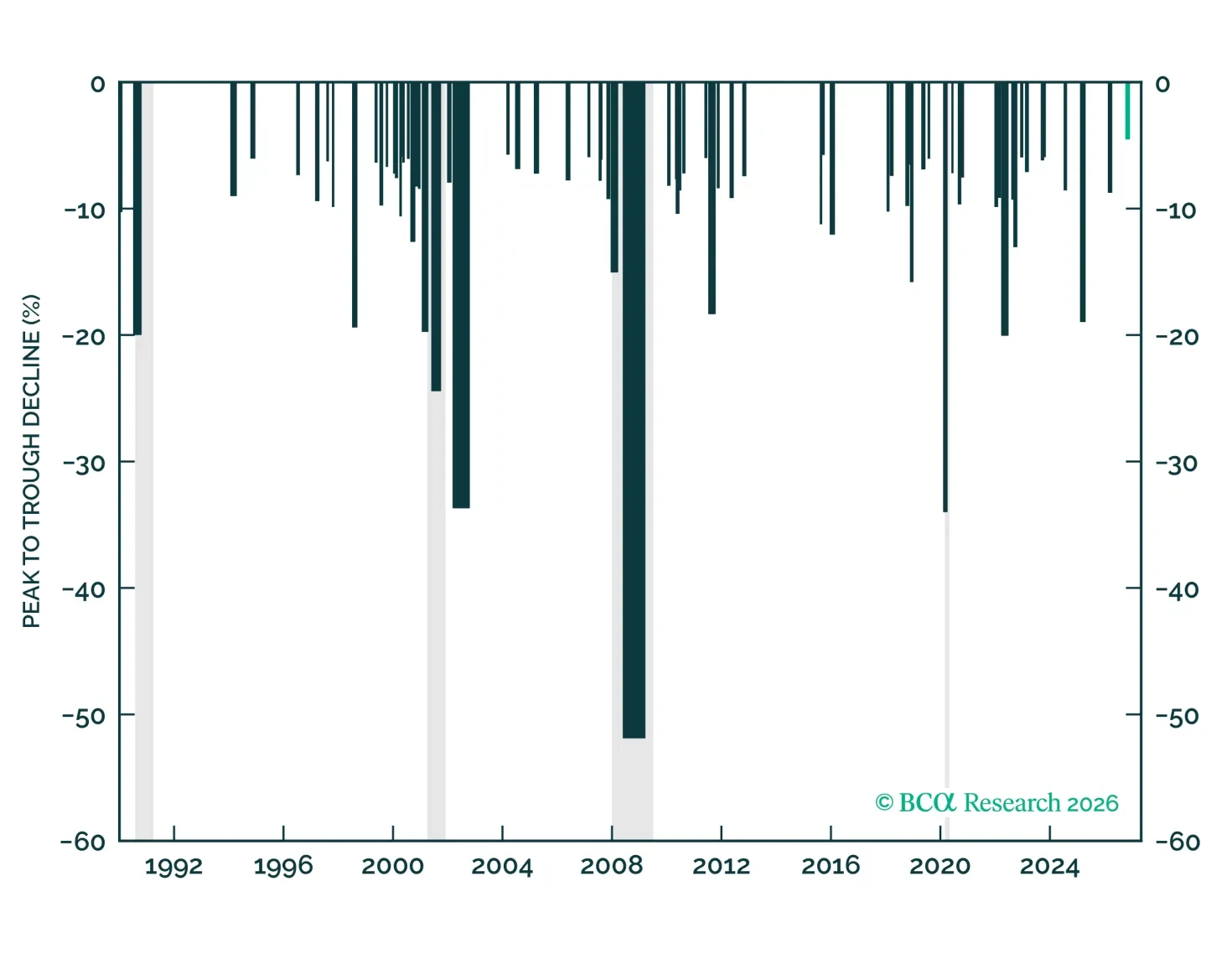
AI capex concerns have pushed the S&P 500 to the brink of a drawdown. But the cycle remains strong, drawdowns rarely last long, and Tech valuations had already compressed. And while Democratic governors now oversee about 80% of the data-center pipeline, a blue governor alone is not necessarily a build-out moratorium.
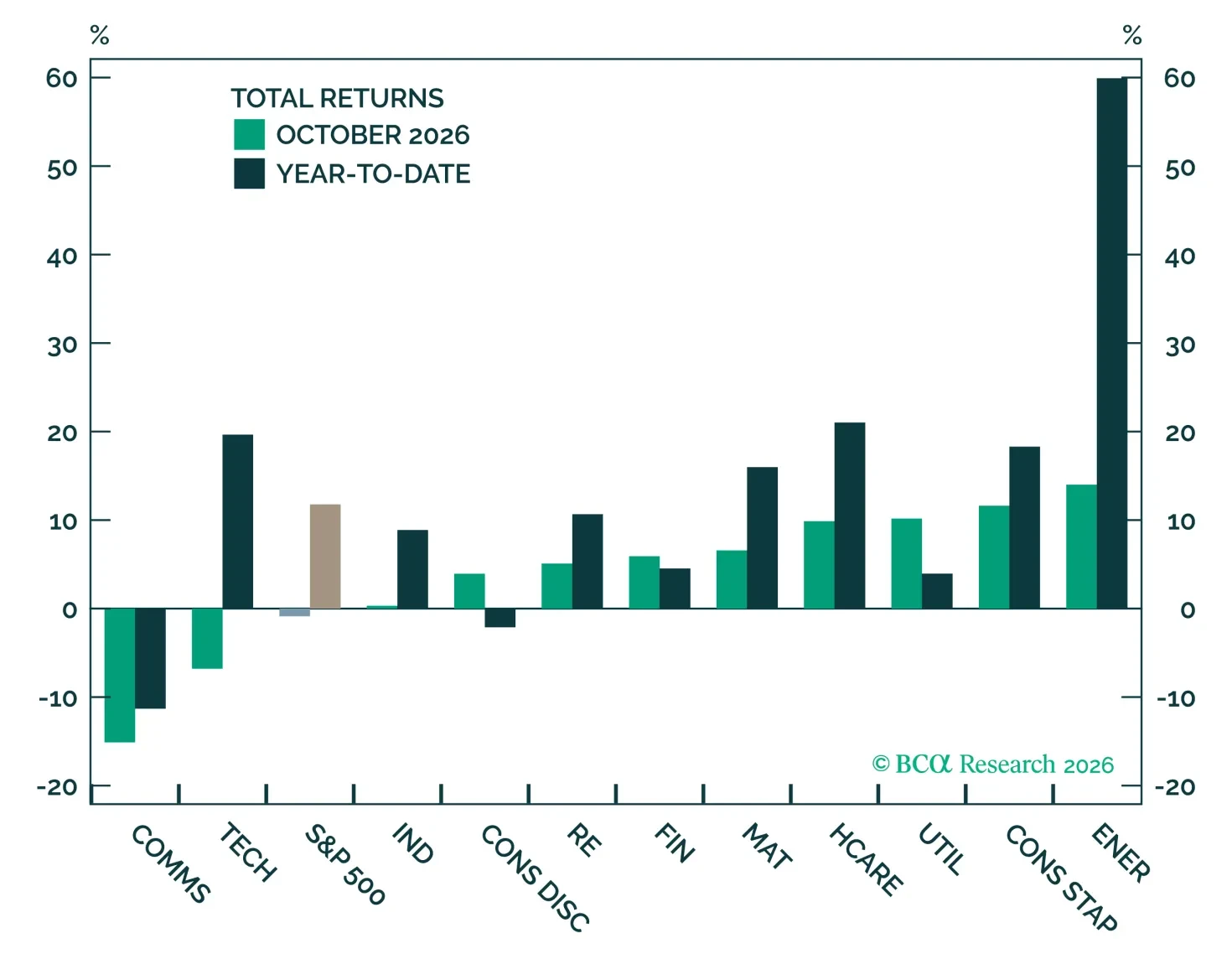
October saw a 0.9% decline in the S&P 500, dragged lower by Communication Services (-15.1%) and Information Technology (-6.8%). All other sectors delivered positive returns, led by traditional defensives – Health Care (+9.9%), Utilities (+10.2%), Consumer Staples (+11.6%) – and Energy (+14.0%). Although our overweight Tech call surrendered some performance during the month, IT has still gained 37% since the view was initiated on March 30, outpacing the S&P 500’s 20% advance.
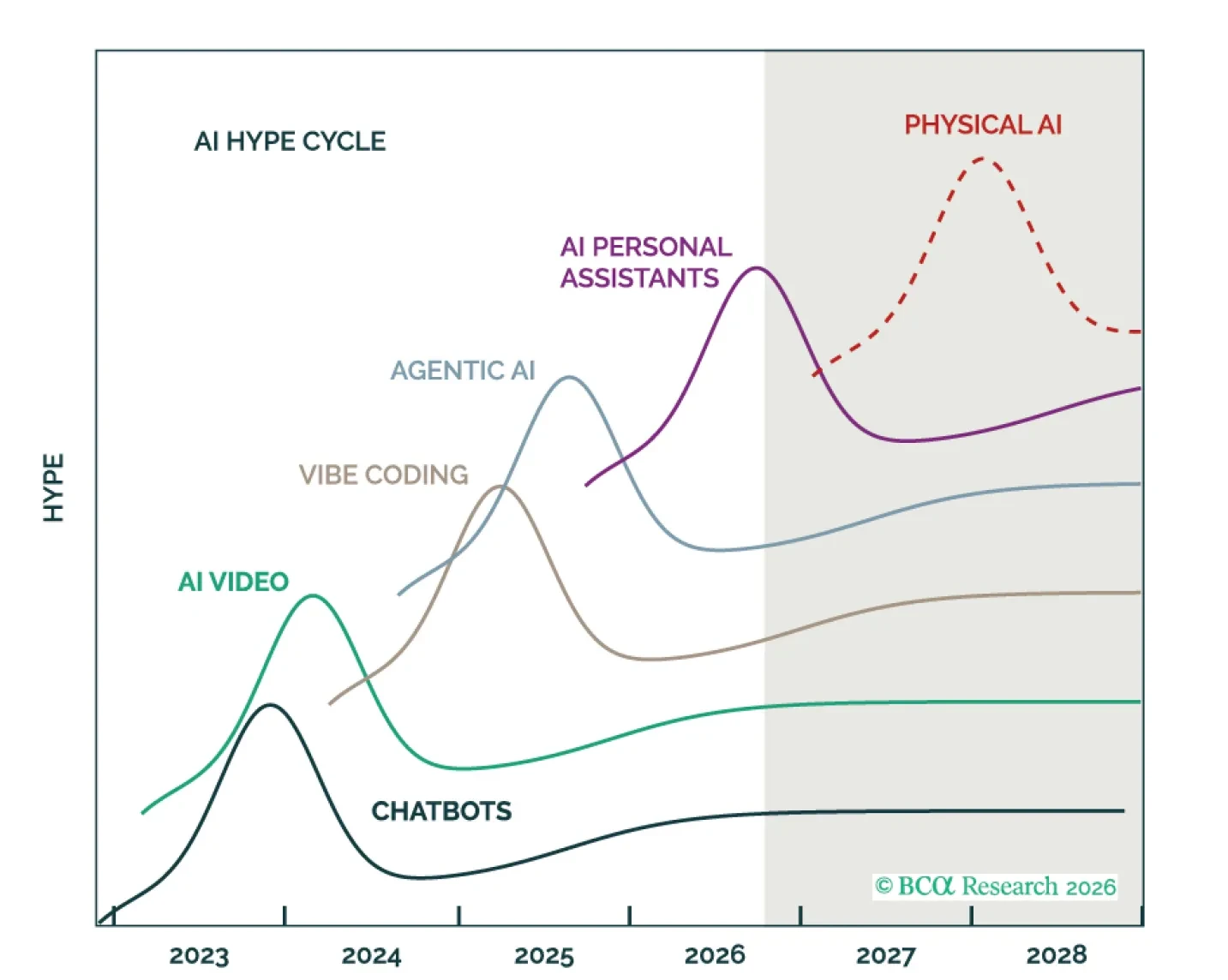
Since ChatGPT’s launch in late 2022, multiple waves of AI innovation have driven markets and dominated the conversation across the investment community. Drawing on an extensive set of questions from BCA clients and strategists, our new report tackles the uncertainties that remain: What beyond customer demand drives token consumption? Will open-weight models eventually dominate? And, perhaps most importantly, how worried should we be about AI-induced extinction?
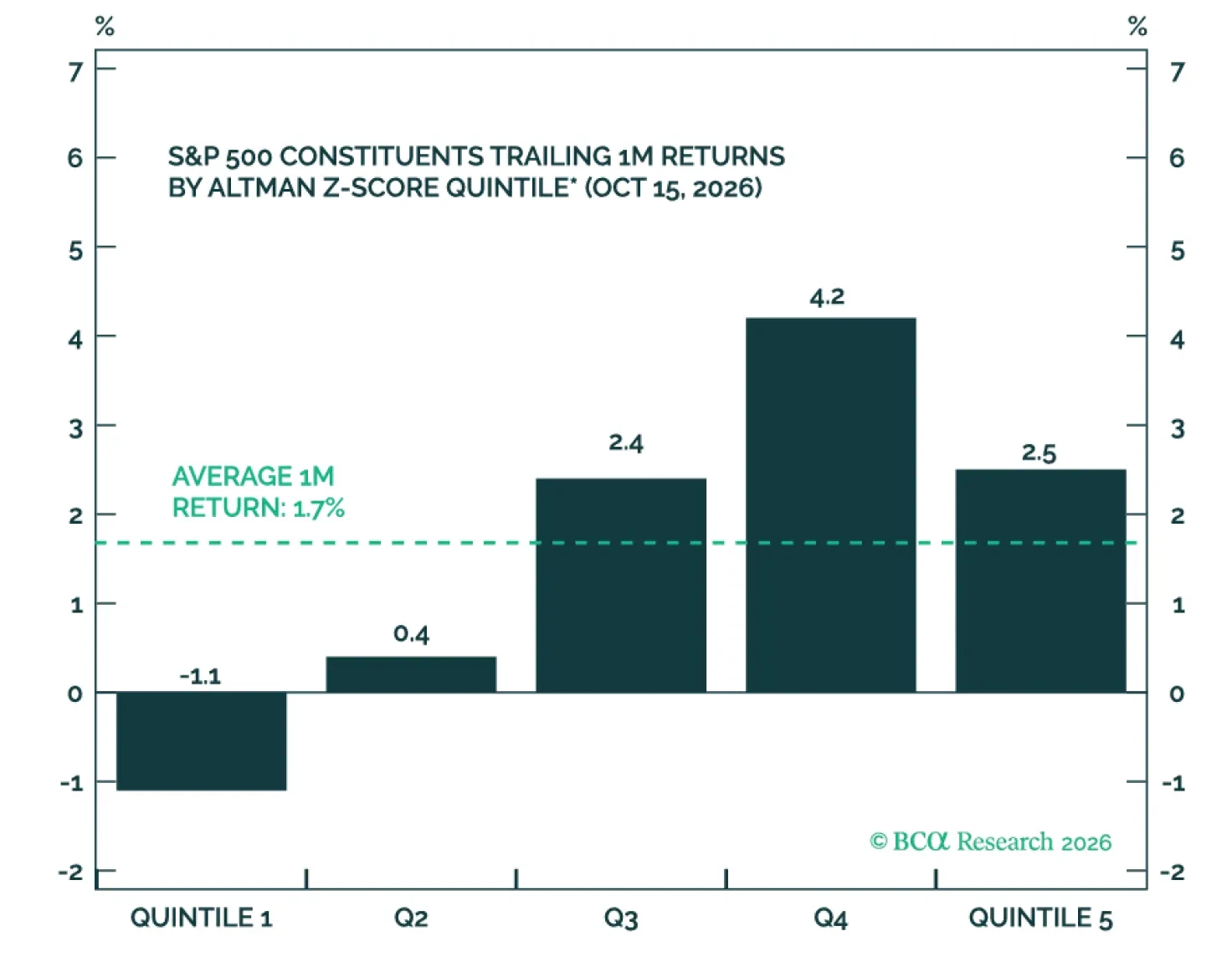
Credit spreads have widened as bond risks intensified, pressuring weak-balance-sheet companies. But the stress is narrow and valuations have already compressed, so equity risks look manageable. Rather than de-risk, we would lean into quality: large over small caps, quality capex, and defensible Tech margins, and look to Q3 earnings for confirmation.
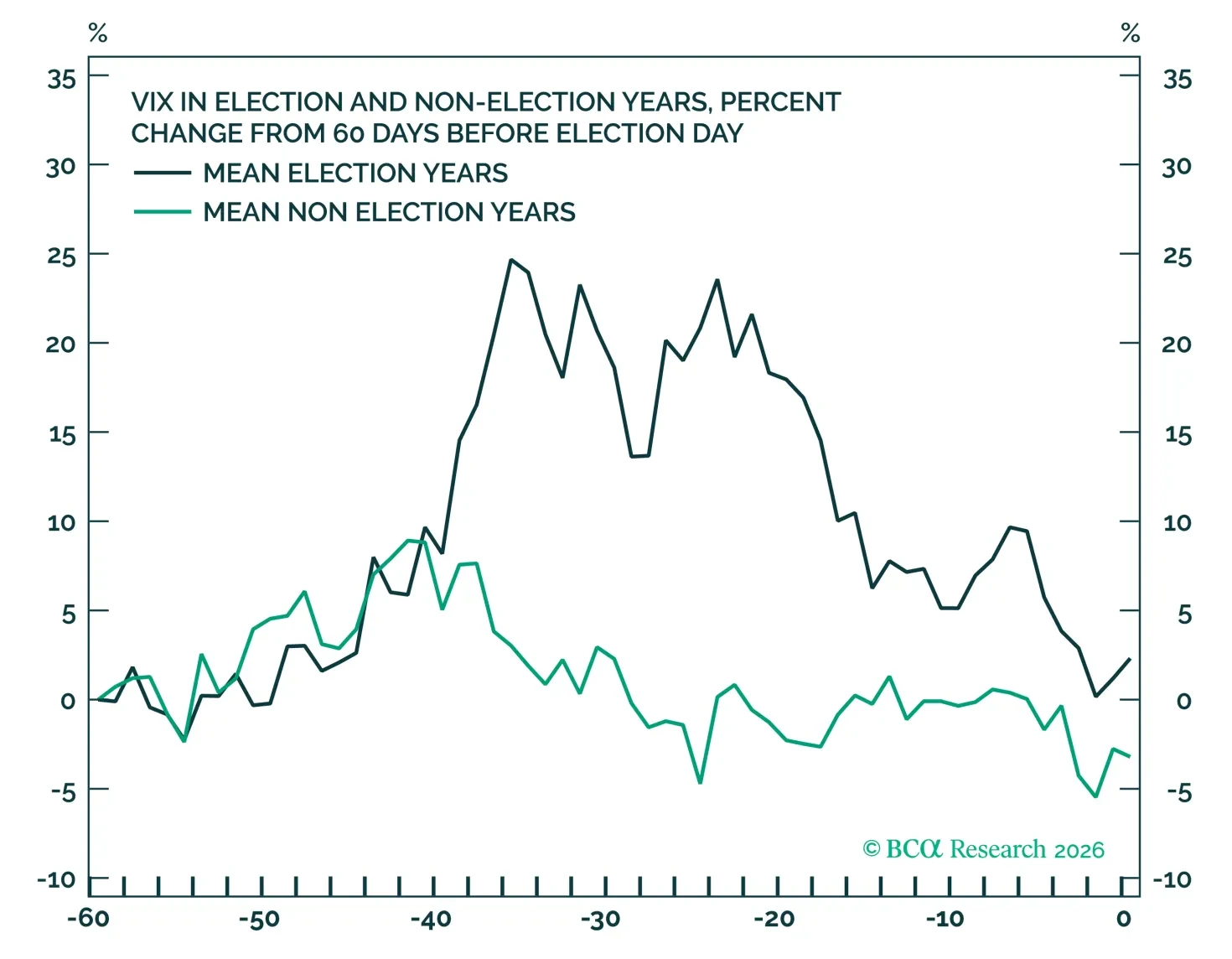
Betting markets give Democrats a 90%-plus chance of flipping the House, but history suggests a midterm flip is business as usual, not a signal for 2028. Volatility measures suggest little of the typical election risk is priced at the index level, but stock-level volatility is elevated, particularly in politically sensitive sectors, and politically exposed stocks are underperforming. Index protection looks inexpensive.
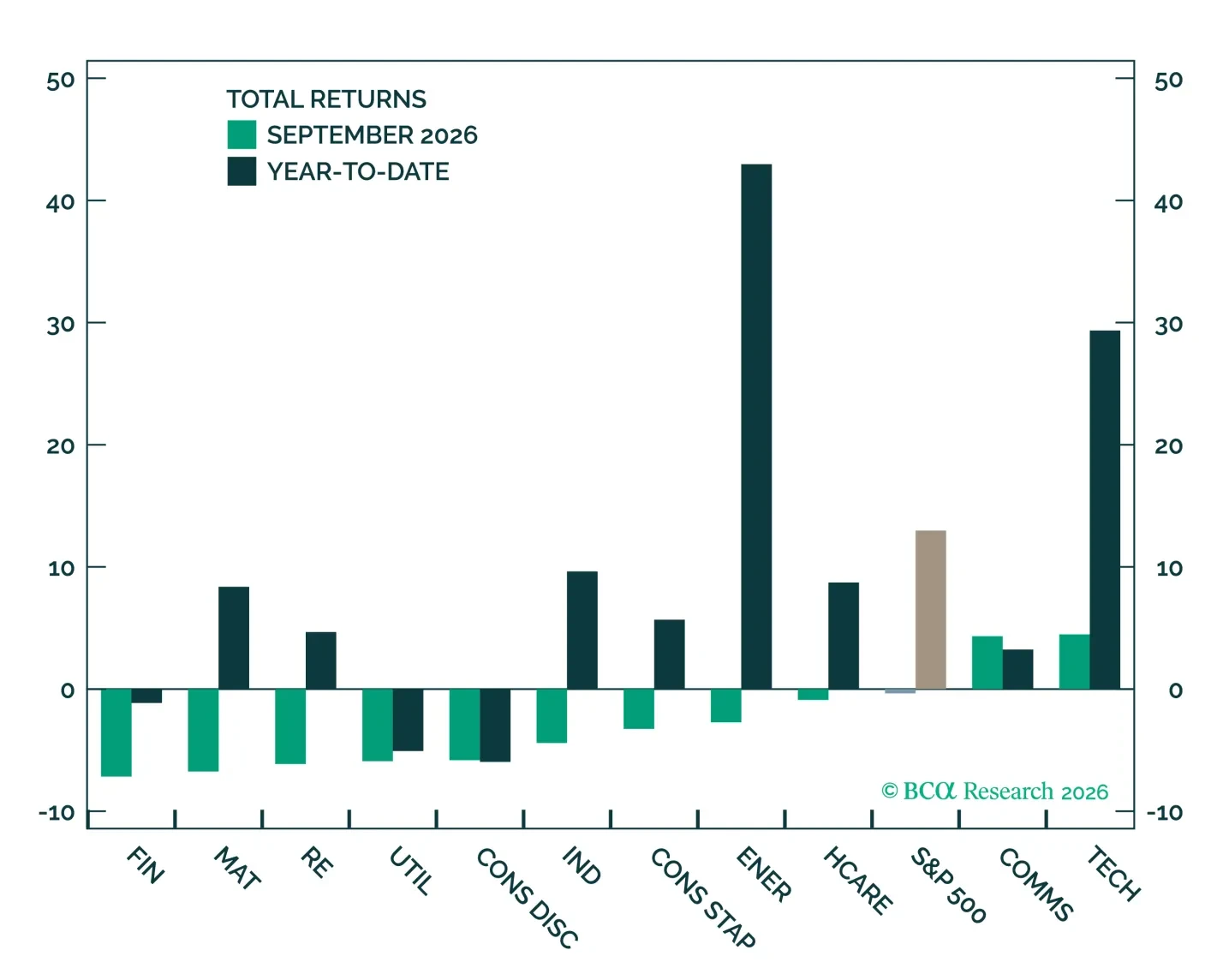
As the 10-year yield surged in September, the S&P 500 slipped but only by 0.3%, supported by Technology and Communication Services. We see upside into year end, with bond yields remaining the key risk.
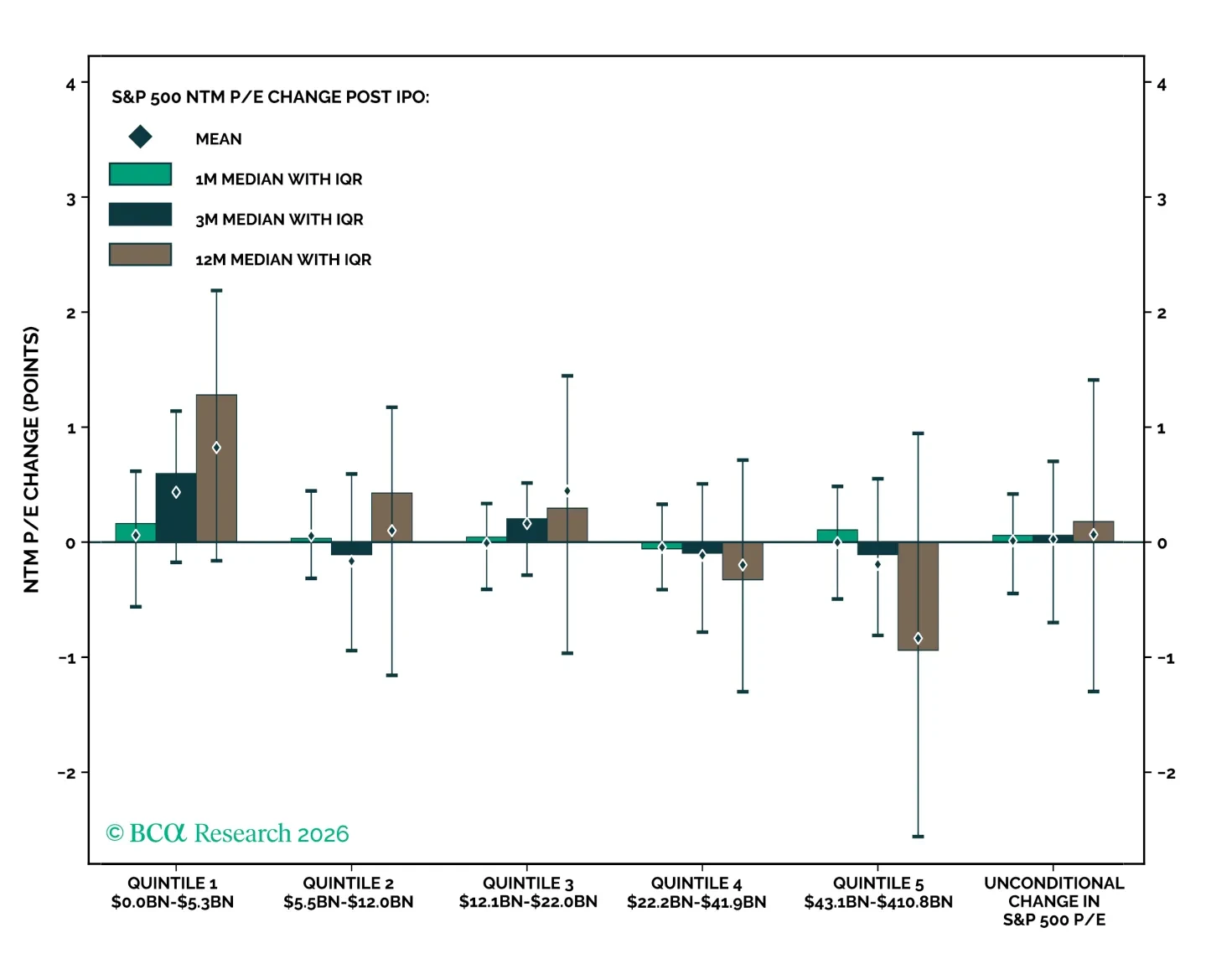
The IPO wave has arrived, dominated by SpaceX’s massive listing. Aftermarket performance has been weak, and elevated issuance is weighing on S&P 500 multiples, although some pressure is already priced. SpaceX remains only partly digested, while Anthropic and OpenAI will bring further supply and greater business model scrutiny.
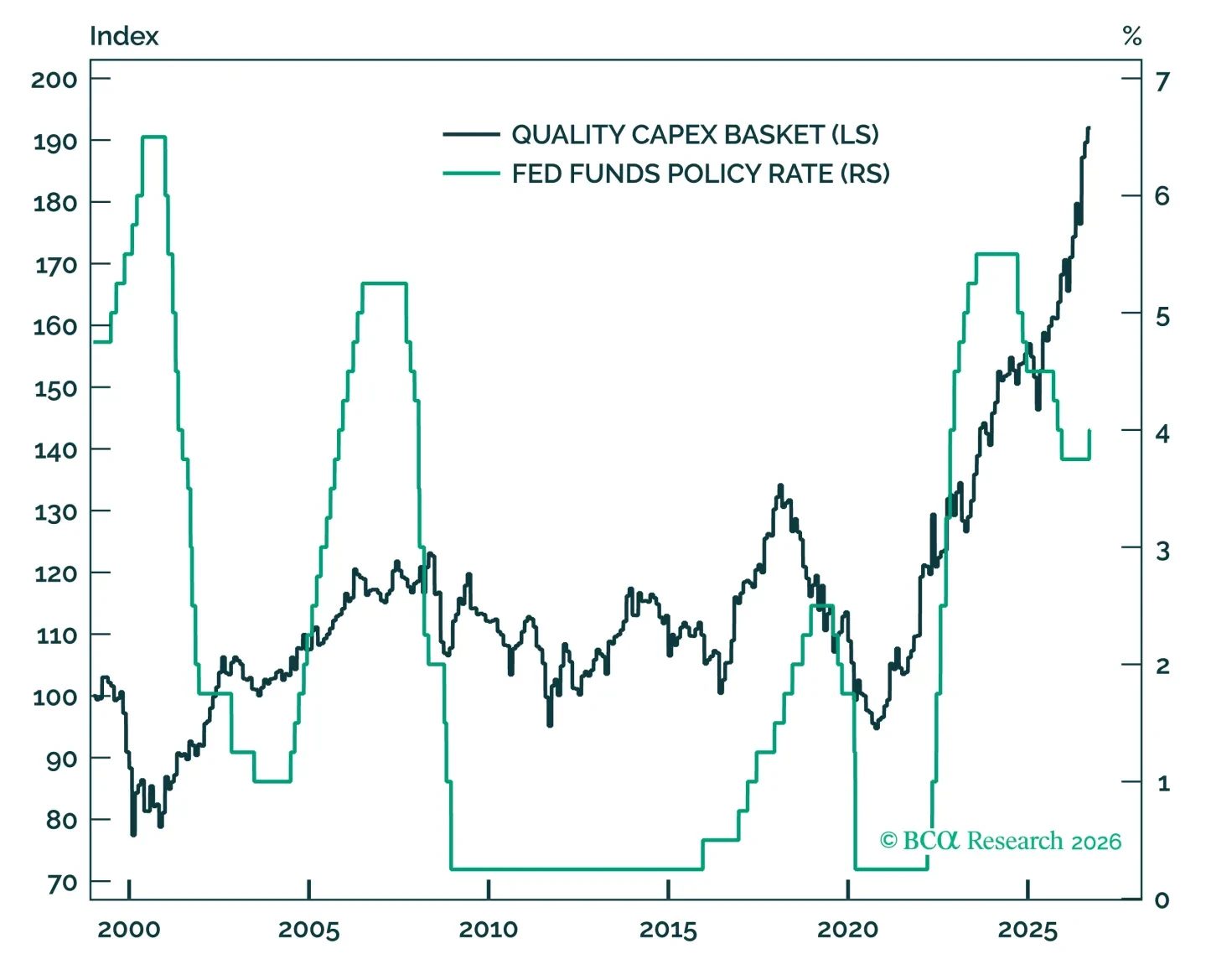
The Fed’s first hike is unlikely to be an equity-market cliff. Recent multiple compression has absorbed some of the rate shock, while bond risk premia, rate volatility, and inflation expectations remain contained. Stocks have typically climbed through hiking cycles, but we favor moving up in quality through our long/short Quality Capex Basket.